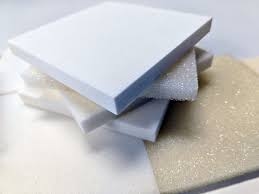
Polymethacrylimide (PMI) foam is gaining prominence in the automotive and transportation sector due to its unique properties that address key industry challenges. PMI foam has gained high popularity in the ongoing industry-wide effort to reduce vehicle weight for enhanced fuel efficiency and lower emissions because of its lightweight composition. PMI foam maintains a remarkable strength-to-weight ratio despite its low mass, which makes it a preferred material for manufacturing various automotive components and structures. PMI foam presents heat resistance, thermal insulation properties, and vibration-damping capabilities. These qualities contribute to improved engine performance, quieter rides, and longer part lifespans. The foam's thermal insulation capabilities are crucial for applications requiring effective temperature management, contributing to improved overall vehicle performance. PMI foam is extensively employed in structural applications, serving as a core material for composite structures in components like interior panels and seats. Its ability to dampen vibrations is an exclusive feature, enhancing ride comfort and reducing noise in transportation applications, which, in turn, augments the market demand across the globe. According to the International Organisation of Motor Vehicle Manufacturers, in 2020, the production units of commercial vehicles and passenger cars accounted for 21.79 million and 55.83 million, respectively. Also, the production of these vehicles increased and reached 23.09 million commercial vehicles and 57.05 million in 2021. Therefore, the growing production of commercial vehicles and passenger cars is exhibiting a positive influence on the market demand at a considerable rate.
The Global PMI (Polymethacrylimide) Foam Market is valued at approximately USD 101.7 million in 2022 and is anticipated to grow with a healthy growth rate of more than 6.52% over the forecast period 2023-2030.
The PMI (Polymethacrylimide) Foam market is expanding because of factors such as a surge in demand for composites-based sports products, increasing use of PMI foam across the automotive & transportation sector, and imposition of stringent regulations regarding weight and emissions control. Moreover, the growing focus on the enhancement of properties of PMI foam and the rising inclination towards clean and renewable energy sources are anticipated to create lucrative opportunities for the market. However, the high cost associated with PMI foam and the availability of alternative materials stifles market growth throughout the forecast period of 2023-2030.
The growing emphasis on clean and renewable energy sources has the potential to influence the demand for Polymethacrylimide (PMI) Foam across the globe. In the wind energy sector, lightweight materials are essential for constructing efficient rotor blades. PMI foam is lightweight and resistant to high temperatures, positioning it favorably for potential applications. Additionally, there is a rise in demand for insulation materials such as PMI foam, especially in solar energy applications, as the renewable energy sector expands, contributing to increased construction and infrastructure development. PMI foam is used in the encapsulation of solar panels to protect them from the elements and maintain their efficiency. Increased deployment of solar panels due to the growing popularity of renewable energy could drive up demand for PMI foam. Also, PMI foam is used as a lightweight and durable blade material for wind turbines, as well as PMI foam has excellent thermal insulation properties, making it suitable for use in energy storage systems like batteries and thermal energy storage tanks. PMI foam could find new applications in this sector as the demand for grid-scale energy storage grows alongside renewable energy adoption. The International Energy Agency reported that the usage of renewable energy increased by 3% in 2020, compared to all other fuels. Moreover, in Jan 2023, the Indian Union Cabinet approved the National Green Hydrogen Mission with a total initial investment of USD 197.44 billion, including expenditure for the SIGHT programme, pilot projects, R&D, and towards other Mission components. PMI foam is partially derived from recycled materials and boasts high recyclability, and meets the sustainability goals of the renewable energy sector. This eco-friendly aspect makes it a preferred alternative compared to alternative materials. Furthermore, the overall growing trend of research and development activities in the clean energy field leads to the discovery of novel applications for PMI foam, broadening its market prospects. Thus, the rising demand for renewable energy is anticipated to propel the adoption of PMI foam at a substantial rate, which is creating lucrative opportunities for market growth over the anticipated years.
Global PMI (Polymethacrylimide) Foam Market Size Study & Forecast, By Application (Aerospace and Defence, Wind Energy, Automotive & Transportation, Sporting Goods, Others), and Regional Analysis, 2023-2030
Global PMI (Polymethylimide) Foam Market is segmented by Application. The Total Market revenue is calculated based on the revenue generated from the sales of PMI foam. The major key players in the market are Evonik Industries AG, Solvay S.A., Baoding Meiwo Engineering Materials Technology Co., Ltd., Tasuns Composite Technology Co., Ltd. Hunan Rifeng Composite Co., Ltd. Other popular regional players across various countries are also considered for revenue calculation.