2026-07-10T18:30:00.000Z
Aug 06, 2025 News Article
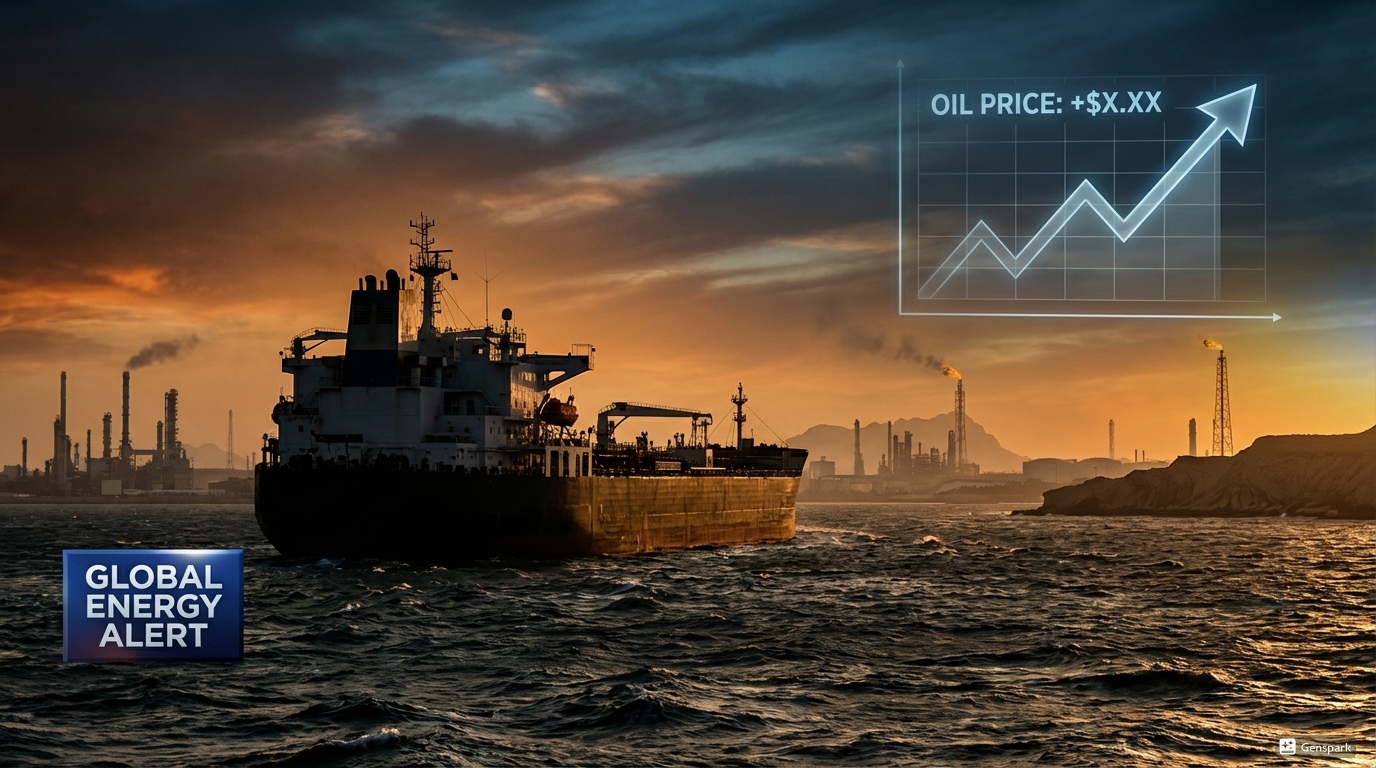
The June 2025 airstrikes by Israel on Iranian military installations in Esfahan and Khuzestan sent global oil prices soaring by 11%. This action immediately drew the energy markets' gaze to a critical geographical bottleneck: the Strait of Hormuz.
The escalation—the most significant direct military exchange between the two countries in recent years—raised immediate questions about supply continuity for energy-dependent economies across Asia, Europe, and beyond.
The airstrikes targeted facilities linked to Iran's ballistic missile programme. Within 48 hours, Iran's parliament voted to authorise the potential closure of the Strait to hostile maritime traffic. The measure was declaratory rather than operational, and no closure was enforced. Even so, it was sufficient to send Brent crude above $96 per barrel—its highest level since October 2023—as markets priced in the risk of disruption rather than its certainty.
The Strait of Hormuz carries approximately 20% of global oil supply through a 21-mile navigable channel flanked by Iran on the north and Oman on the south. Much of the production capacity of Saudi Arabia, Iraq, Kuwait, and the UAE transits this route. There is no practical alternative for the bulk of Gulf exports at current infrastructure levels, which is precisely what makes any legislative signalling toward closure so consequential for global pricing.
India imports more than 80% of its crude oil, sourcing over 60% of that volume from the Gulf region. Japan and South Korea face structurally comparable dependencies. China has diversified its crude supply base more actively over the past decade, yet its Gulf exposure remains material.
For all four economies, the combination of elevated prices and potential route disruption represents a dual risk that operating budgets and procurement pipelines were not structured to absorb simultaneously.
Shipping insurers moved quickly to revise risk assessments, raising premiums on Gulf-bound vessels. Some operators began rerouting cargo via the Cape of Good Hope—a decision that adds transit time and cost while removing Hormuz exposure. According to Bloomberg estimates, daily shipping costs from the Gulf to Asia rose 12 to 15% from mid-June as these adjustments worked through the market.
Saudi Arabia described its stance as monitoring rather than intervention—consistent with the group's stated preference for managing production decisions against supply-demand fundamentals rather than geopolitical volatility. Premature output adjustments risk amplifying uncertainty rather than containing it, particularly when price movements are driven by geopolitical positioning.
The United States released 10 million barrels from its Strategic Petroleum Reserve to contain domestic price pressures and limit speculative positioning. India and China each initiated contingency reviews of public-sector oil reserves, though neither confirmed deployment as of the final week of June.
Open conflict between Israel and Iran remains one scenario among several. The more probable near-term pattern is grey-zone activity: cyberattacks on energy infrastructure, targeted maritime operations, or further legislative escalation. Each of these can sustain market anxiety without triggering a closure event, and any of them can extend the risk premium currently embedded in oil prices.
For energy-intensive industries and procurement functions, the implications are practical. Hedging windows for Q3 and Q4 positions merit reassessment. Shipping and logistics contracts with risk-activated clauses may already be in motion. Downstream exposure through petrochemical inputs warrants scenario modelling. For corporate risk functions and boards, low-probability geopolitical scenarios now warrant more prominent weighting than the pre-June operating environment suggested.
The Strait has not closed. The probability that it will remains low. But the combination of military action, formal legislative signalling, and an oil market already responding to supply constraints entering Q3 creates a risk environment that is meaningfully different from the one that preceded it. The duration of that premium depends on the trajectory of Israeli-Iranian engagement—a trajectory that remains, at this point, genuinely uncertain.
Latest Articles
2026-07-10T18:30:00.000Z