
2026-08-09T18:30:00.000Z
Jan 28, 2026 Blog
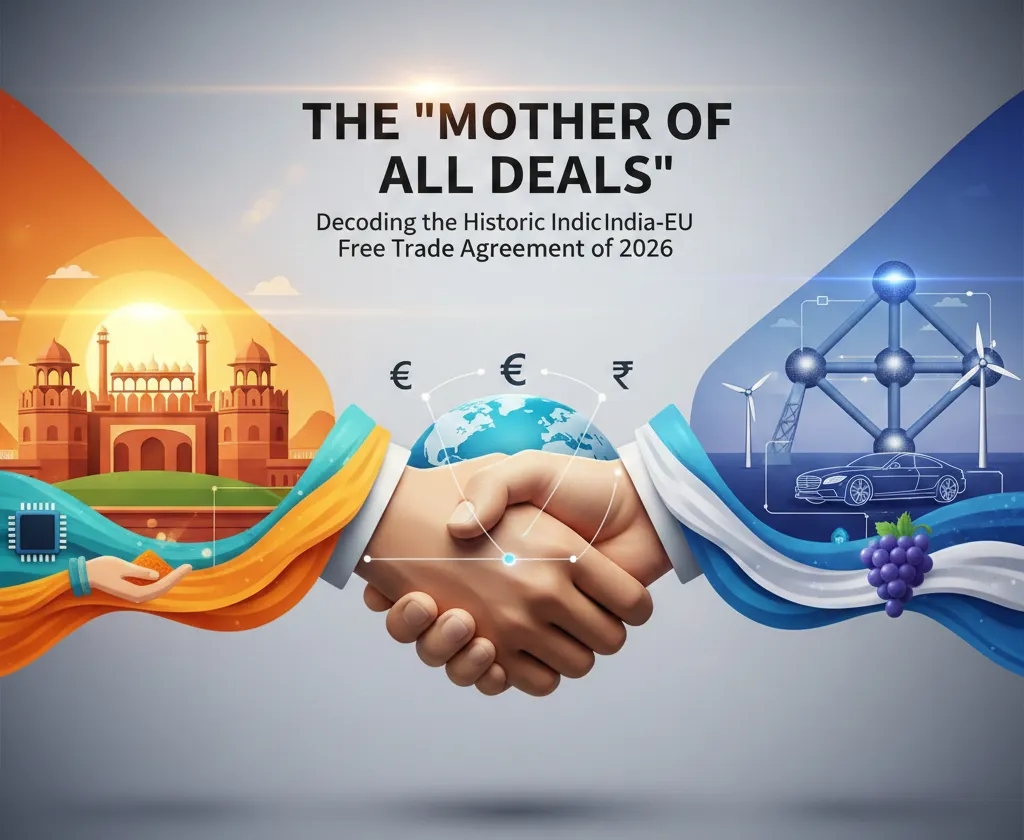
After 18 years of stalled negotiations, missed deadlines, and complex geopolitical maneuvering, the wait is finally over. On January 27, 2026, Prime Minister Narendra Modi, alongside European Commission President Ursula von der Leyen, announced the formal conclusion of the India-EU Free Trade Agreement (FTA).
Labelled by Union Commerce Minister Piyush Goyal as the "Mother of All Deals," this pact is not merely a trade document; it is a tectonic shift in the global economic order. Spanning a market of 2 billion people and representing nearly one-third of global trade, the agreement creates a corridor of trust between the world’s second and fourth-largest economies at a time when "de-risking" from traditional supply chains has become a survival imperative.
The scale of the agreement is staggering. According to the official factsheet from the Ministry of Commerce, the FTA delivers unprecedented market access for more than 99% of India’s exports by trade value.
The Indian side has secured immediate duty elimination on 70.4% of its tariff lines, covering roughly 90.7% of its current exports to the EU.
In exchange, India is offering the EU access to 92.1% of its tariff lines, covering 97.5% of EU export value.
The sentiment on the ground in New Delhi was one of hard-won victory. Taking to "X" (formerly Twitter), Prime Minister Modi emphasized the human element of the deal:
@narendramodi: "The historic agreement with EU, India's largest FTA in history, has substantial benefits for our 1.4 billion people. It will make access to European markets easier for our farmers and small industries and create new opportunities in manufacturing. #IndiaEUTradeDeal"
EU Commission President Ursula von der Leyen echoed this, highlighting the strategic nature of the partnership:
@vonderleyen: "The EU and India make history today... We have created a free trade zone of 2 billion people. We have sent a signal to the world that rules-based cooperation still delivers great outcomes."
What distinguishes this 2026 pact from traditional trade deals is its focus on the future. A significant portion of the negotiations centered on the Carbon Border Adjustment Mechanism (CBAM). To ease the transition for Indian exporters, the EU has pledged €500 million ($540 million) in support over the next two years to help India’s industrial transformation.
Furthermore, the deal includes a dedicated chapter on SMEs, acknowledging that the "Brussels Effect" (high regulatory standards) can often be a barrier for small businesses. By harmonizing standards on technical barriers to trade (TBT), the deal ensures that a small manufacturer in Ludhiana can sell to a boutique in Lyon with minimal red tape.
The stock markets reacted with surgical precision following the January 27 announcement.
While the negotiations have concluded, the work is far from over. The agreement now enters a phase of "legal scrubbing" and parliamentary ratification. Minister Piyush Goyal has expressed optimism that the deal will formally enter into force by late 2026.
For the global investor, the "India-EU ETF" narrative is now more relevant than ever. This deal isn't just about moving goods; it's about integrating India into the high-value European supply chain. As the world watches, the two largest democracies have proven that even in an era of fragmentation, a well-structured, "humanized" trade deal can still be the ultimate catalyst for growth.
Latest Blogs
2026-08-09T18:30:00.000Z

2026-08-07T18:30:00.000Z

2026-08-07T18:30:00.000Z



