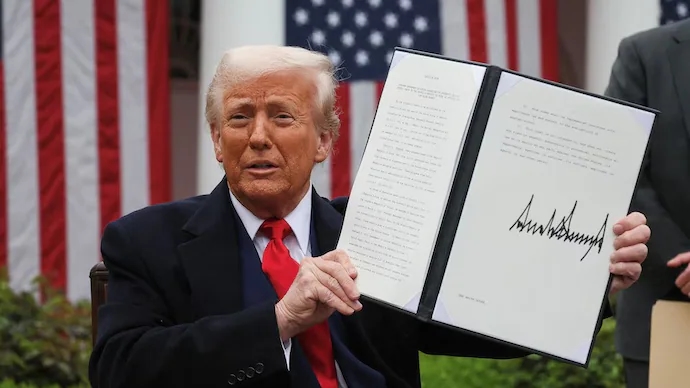
In a series of assertive trade actions starting August 2025, President Donald Trump has initiated a new phase of global economic protectionism. The measures include tariffs as high as 41% on goods from 66 countries, encompassing key imports such as pharmaceuticals, industrial metals like copper, and semiconductors.
The administration claims these tariffs are necessary to rebalance trade deficits, enforce fair pricing by foreign pharmaceutical firms, and safeguard American industrial competitiveness. However, the ripple effects are already being felt across global supply chains.
A Timeline of Trade Realignments
- August 1: Tariffs imposed on 66 countries
- August 7: Reciprocal tariffs planned on 69 nations
- August 12: Decision on China’s trade truce
- August 29: End of de minimis import exemption
- September 29: Deadline for pharma firms to cut US drug prices
These dates represent more than policy markers—they set the tone for global trade strategy over the next 12 to 18 months.
Sectors Under Strain
The pharmaceutical sector is under intense scrutiny, with the Trump administration threatening price caps and import restrictions unless firms comply with domestic pricing demands. Big Pharma is lobbying aggressively, but public opinion in the US supports cost reduction.
The semiconductor industry, already destabilised by the US–China tech war, now faces additional uncertainty. Leading chipmakers in Taiwan, South Korea, and Japan are reassessing investment and logistics pipelines to mitigate future exposure.
Emerging Market Exposure
India, Vietnam, Brazil, and several ASEAN nations, which benefitted from prior China+1 strategies, are now under scrutiny. These regions must quickly recalibrate trade policies and infrastructure readiness if they are to remain attractive partners in a post-tariff world.
Geopolitical and Economic Implications
The tariffs signify more than economic recalibration; they’re also tools of political leverage. Trade partners including the EU, India, and Japan are contemplating retaliatory measures, potentially igniting mini trade wars that could undermine global recovery momentum.
Investor and Market Reactions
Markets have responded with high volatility. While U.S. indices initially surged on expectations of reshoring and domestic gains, uncertainty about supply chain resilience, pricing pressures, and geopolitical friction has dampened investor enthusiasm.
Conclusion
The Trump tariffs mark a decisive moment for global trade. They not only reshape short-term economic alignments but also redefine the rules of engagement for global supply chains. For C-level executives, procurement heads, and trade policy leaders, strategic agility is now a core survival metric.